|
Author
|
Message
|
|
Data Juggler
|
Data Juggler
Posted 5 Years Ago
|
|
Group: Forum Members
Last Active: 9 Months Ago
Posts: 1.8K,
Visits: 5.6K
|
I bought a tool for writing called Scrivener that isn't very expensive (compared to IClone it is almost free). I use it for scene layouts, but it also has text editor with some features more suited for writing than MIcrosoft Word. 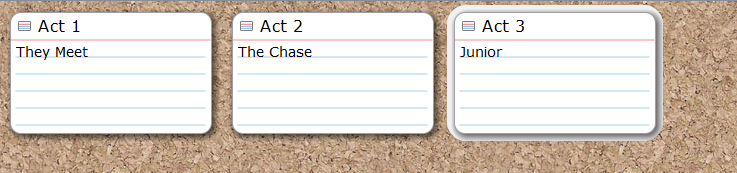 And the same company has another great tool called Scrapple that is like $15 that helps you map out relationships between characters and places, etc. I find it really useful when I need to come back to a project and I forgot a lot of the details. 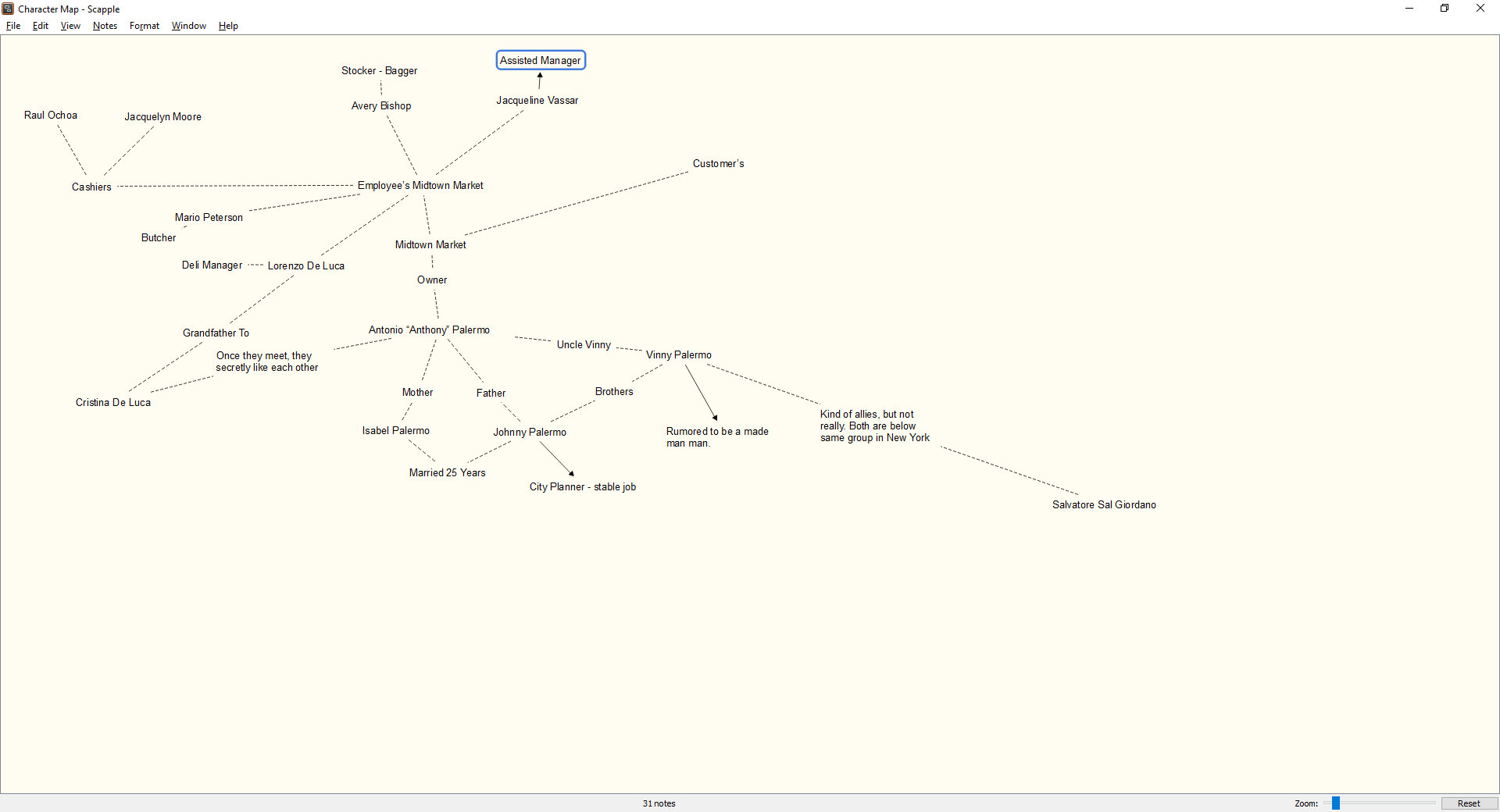 Creator of the free website:
PixelDatabase.Net
A Free Online Text Based Image Editor
|
|
|
|
|
ultimativity
|
ultimativity
Posted 5 Years Ago
|
|
Group: Forum Members
Last Active: Last Year
Posts: 356,
Visits: 736
|
I have not been storyboarding lately, per se. I do try to get my cameras in place for a basic scene, then build out the scene based on what I can see through my camera(s) for each shot. I will snap an image of a particular camera view, blocked several different ways, then use the images to select a shot. I began in 3D with the aim of producing graphic novels. Theoretically, a storyboard could be parlayed into a graphic novel and into a film, so you would have 2 products to sell. I cannot afford Photoshop, so I use Gimp, which is open source and free. Attached is one of my graphic novel pages created with Daz, Gimp and Inkscape, all of which are free products. 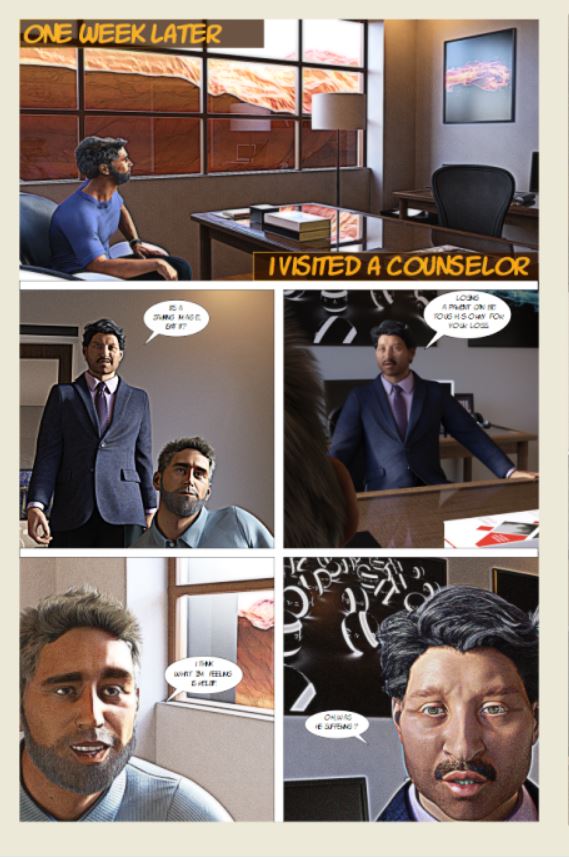 Nathan
|
|
|
|
|
ultimativity
|
ultimativity
Posted 5 Years Ago
|
|
Group: Forum Members
Last Active: Last Year
Posts: 356,
Visits: 736
|
@ animagic, thanks for the ShotDesigner link. I am working on a scene now that could use this tool
Nathan
|
|
|
|
|
animagic
|
animagic
Posted 5 Years Ago
|
|
Group: Forum Members
Last Active: Last Month
Posts: 15.8K,
Visits: 31.4K
|
A pre-production tool that I have (although I haven't done much with it) is Shot Designer, which you can block out scenes with. It is animated, that is, it allows you to try out moving your cameras around and see the result. See: https://www.hollywoodcamerawork.com/shot-designer.html. It is intended for live action but could be used for animation too. There is a tutorial somewhere on its use with iClone. And I found it!
|
|
|
|
|
justaviking
|
justaviking
Posted 5 Years Ago
|
|
Group: Forum Members
Last Active: Last Year
Posts: 8.2K,
Visits: 26.5K
|
As a general practice, I do not storyboard my projects.
Why not? Because I am usually a team of one.
For a real team, I believe storyboarding would be an essential step. It's a great way to share the vision, get buy-in from others, and do planning. To that end, I think iClone could potentially play a role. You could do some very rough scene setups. But honestly I'd still probably stick to hand sketching. I've seen behind-the-scene features of how movies are made, and even professional teams like Pixar often use very rudimentary sketches. They don't need to be pretty, they just need to communicate intent.
Later, after storyboarding, iClone could be a great pre-vis tool.
iClone 7... Character Creator... Substance Designer/Painter... Blender... Audacity...
Desktop (homebuilt) - Windows 10, Ryzen 9 3900x CPU, GTX 1080 GPU (8GB), 32GB RAM, Asus X570 Pro motherboard, 2TB SSD, terabytes of disk space, dual monitors.
Laptop - Windows 10, MSI GS63VR STEALTH-252, 16GB RAM, GTX 1060 (6GB), 256GB SSD and 1TB HDD
|
|
|
|
|
Colonel_Klink
|
Colonel_Klink
Posted 5 Years Ago
|
|
Group: Forum Members
Last Active: 5 Months Ago
Posts: 1.1K,
Visits: 7.7K
|
Hey thanks everyone for your responses. I know that storyboarding has it's part in the movie making industry and it was something I learned when I went to film school, but like a lot of things I've had to relearn since being ill, storyboarding had slipped way down into my "wonder if I can still do this?" segment of my brain. That said I'm currently reading the book I mentioned in the original post and one thing I had forgotten about, or not really tried because I used to be able to sketch reasonably well.. Sort of chunked out stick men, but that is another story... is simple character figures. Storyboarding doesn't have to be picture perfect. All it needs to do is depict what your scenes are and what your characters are doing... conveying the story so that when you go to shoot it, or set it up in iClone, you have a working plan. A plan that corresponds with your screenplay or idea. Anyway here's a small article on star figure drawing for those of us who struggle at drawing characters https://medium.com/designer-recipes/star-people-how-to-storyboard-quick-and-effective-5ea812ab153dCheers Bob
* * * * * * * * * * * * * * * * * *
See all my content in one place
Facebook Page: CWK3D Game and Film Content
Cancer Survivor - Retired Teacher - Geriatric Icloner still learning
Hardware: ZX80; Operating System- ZX80 Basic; CPU - ZX80 @ 3.25 MHz; Memory - 1KB; Hard Drive - N/A; Storage - Cassette; Monitor: Any old CRT TV
|
|
|
|
|
james_muia
|
james_muia
Posted 5 Years Ago
|
|
Group: Forum Members
Last Active: 3 Years Ago
Posts: 253,
Visits: 1.3K
|
As a solo creator, I usually just visualize everything in my head. Writing the script, and making notes in Trello helps. I guess you can say instead of creating a visual storyboard, I write it out with notes. If I were to storyboard, it would be storyboarding the choreography of a fight scene or something like that. Although I tend to just create the choreography based on actions and reactions once I'm in IClone putting it together - after having some idea on where to start.
IMDB: James Muia
Aviticus Dragon on YouTube
Computer Specs:
Intel® Core™ i7-7820X Processor (8x 4.30GHz/11MB L3 Cache)
Corsair Hydro Series H115i 280mm
Liquid CPU CoolerASUS ROG STRIX X299-E Gaming Motherboard
32 GB DDR4-3200 GSKILL Ripjaws V Memory
NVIDIA GeForce GTX 1080 Ti - 11GB - EVGA FTW3
|
|
|
|
|
TopOneTone
|
TopOneTone
Posted 5 Years Ago
|
|
Group: Forum Members
Last Active: 2 Years Ago
Posts: 329,
Visits: 3.2K
|
Thanks colonel Klink for raising this very interesting discussion. I tend to wing it too often and feel I need to be more disciplined in scripting and working out scenes in advance, so I plan to give storyboarder a go. I think this could be a very interesting approach to demonstrating the value of iclone in Previz. I’ve had a few industry bods acknowledge iclone may be useful in this, but they need to see actual examples to be convinced. Cheers,
Tony
|
|
|
|
|
thebiz.movies
|
thebiz.movies
Posted 5 Years Ago
|
|
Group: Forum Members
Last Active: 4 days ago
Posts: 2.1K,
Visits: 42.3K
|
Im with you Cary. Story-boarding has a very important role in live action (saving money and time) but is often done using 3d software to sketch out the ideas. So I'll jot down those basic ideas on paper and then when I get to Iclone and get to work I'm generally sketching those ideas out further until I get what I want. I kinda feel that real time animation has a lot of the benefits of story-boarding built into the animation process. I will say however, its super useful/neatg to see storyboards from other filmmakers as it gives you a peek into their process from the mind to the screen.
|
|
|
|
|
Cary B
|
Cary B
Posted 5 Years Ago
|
|
Group: Forum Members
Last Active: Last Month
Posts: 478,
Visits: 3.8K
|
illusionLAB (1/24/2020)
Storyboarding is essential - if you want to maximize your creativity and save yourself hundreds of hours of tinkering - and actually make the film you imagine. You don't have to be able to draw, it's just a road map for your production - there is not one animator on planet Earth who can "block out" a scene as quickly as someone drawing stick figures in little boxes. So, ironically... the time saved skipping the storyboard stage is effectively making your scene/film taking days or weeks instead of hours. There's a huge difference in productivity between opening iClone with an idea as opposed to opening iClone with a plan. Of course there are "happy accidents" that occur when you're tinkering but having a plan does not stop them from happening - it's just part of the creative process. I also think that as many of us are "one man shows" it's even more beneficial because it forces you to wear one hat at a time. Imagine while you're writing you stop mid sentence to "see" what that shot would look like with a camera dolly in iClone... or, when you're sound mixing you drop that to open CC3 and change your character's eyes. So yes, storyboarding may seem like a chore... but it's the best time to figure out where the weaknesses and strengths of the visual you're about to create - it's not just a stickman version of your script, it's your film in the raw.I love seeing topics like these in the forum -- that is, about general aspects of film-making -- and I don't come across them too often.They make me think, and I learn stuff. illusionLAB, I was happy to see your post. I've been pondering and weighing it. As I said, I don't do a lot of actual storyboarding, but I do use it on occasion to work out a complex sequence. Your post made me question whether I should do more of it. In the interest of sparking more conversation about this and the film-making process in general, let me say that I'm dubious that storyboarding saves time in the long run, (when you are talking about a 1-man operation). That doesn't seem to be my experience. Even when you have a storyboard, there is a tinkering process that has to go on to translate the storyboard vision into an actual camera shot. You still have to consider the rule of thirds, the dof, and matching the perspective of the storyboard. Sometimes you find that elements in the set or the position of the avatar have to be tweaked to make the composition work and give your shot the focus you intend. Of course, you are not starting from scratch when you have a storyboard image, but it's really just a rough guide. The storyboard as a whole is a series of visual sequences that tell your story. To create this series of visuals you have to conceive of them and commit to a particular way of visual narration. You have to go through a creative discovery and decision-making process to build this sequence. This takes time, whether you are doing it through sketches or whether you are doing it directly in Iclone. While it is true that you can sketch out your concept faster than you can animate Iclone avatars, that seems beside the point. In both cases the real process is taking place inside your imagination, faster than either can be done. And in both cases you still have to position and animate the avatars. Most of the time, for me, I conceive not just of a single camera shot, but of a series of shots, each one leading to the next. If I have this series of shots in my head and I note it in the script I am writing, I don't need to sketch out a storyboard for it. It's already there in my head when I go to shoot the scene in Iclone. But other times I don't have a strong visual sense of a scene when I am writing the script. It can sometimes help me to storyboard those. But also it can be very helpful is to see the full 3d set and props set up in Iclone, so that I can use them effectively as compositional and storytelling tools. Seeing the actual avatars in the set can sometimes spark ideas which might not occur otherwise. So I am a bit dubious that storyboarding saves time. However I do tend to think that sitting down and sketching out a sequence may indeed produce some creative results that would otherwise not happen. It does kind of help you think outside the standard solutions. I think. it can help sharpen the focus of the narrative. You have convinced me I should experiment with doing more of it, and so I'm going to do some roughs of one of my current scenes and see what it produces. If nothing else it will be fun to see what happens. .

|
|
|
|